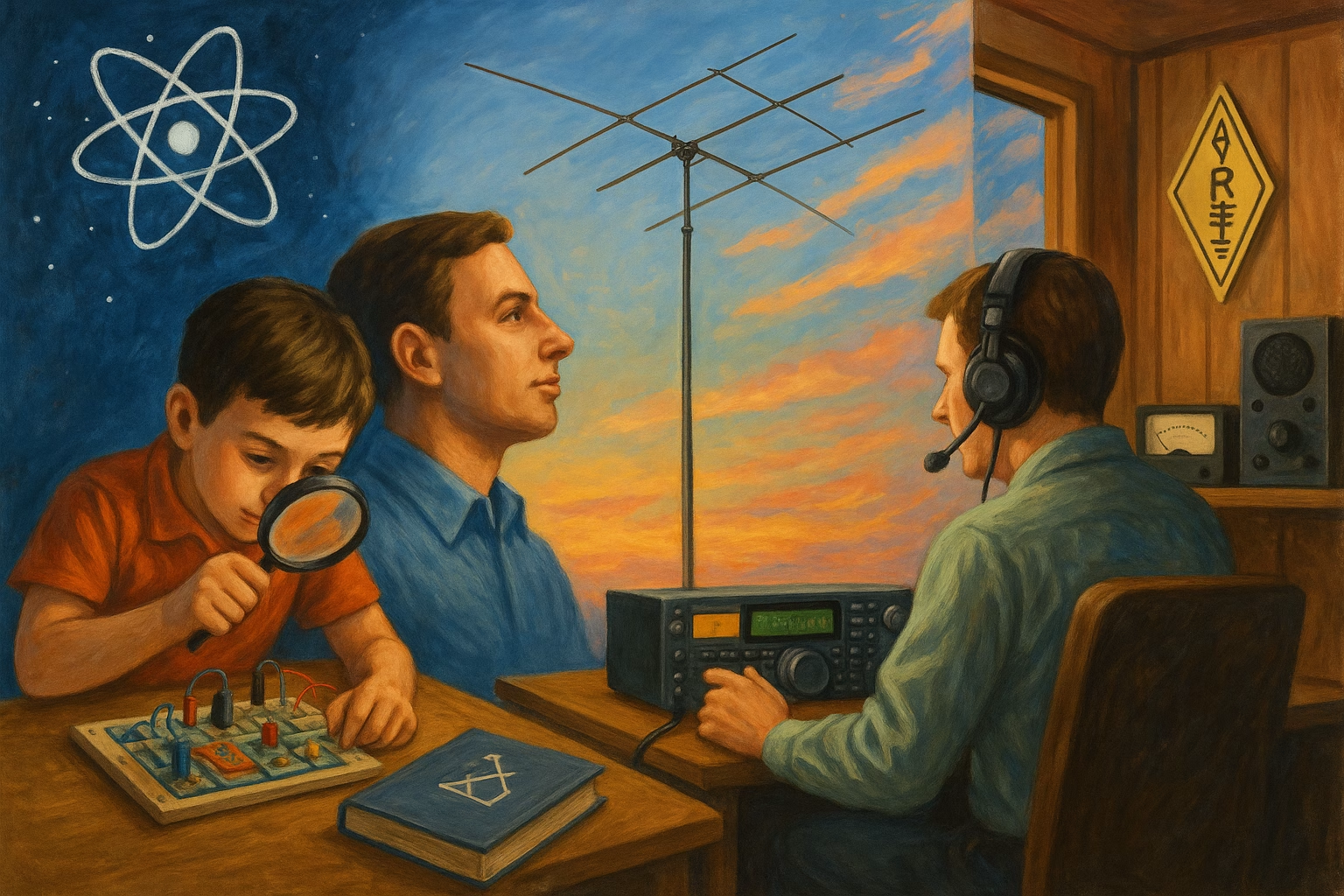
When I signed up for the RAC Basic Qualification Certificate Course, I thought I knew what I was getting into. After all, I’ve spent nearly four decades working at the intersection of electrical safety, machinery safety, grounding, bonding, EMC, and functional safety. I’ve designed, tested, troubleshot, audited, and certified systems far more complex than a typical amateur radio station. So I assumed that amateur radio would be a pleasant diversion—a technical pastime with some knobs, some wires, and a bit of ionospheric magic thrown in for good measure.
What I didn’t expect was how profoundly the journey would resonate with parts of my life I hadn’t revisited in years.
Week after week, chapter after chapter, I found myself reconnecting not just with the physics and electronics that hooked me as a young technician at GFC Hammond in 1985, but with a sense of curiosity and wonder that has been quietly waiting for an excuse to re-emerge. I suppose this series has been, in its way, a return home.
From Theory to Practice—and Back Again
One of the most rewarding aspects of this course has been rediscovering how beautifully simple the foundations of radio are, even when the implementations become sophisticated. Whether I was rebuilding my understanding of modulation, unpacking the superhet receiver architecture, or tracing the path of an errant RF current through a grounding system, the same truth kept resurfacing:
Everything in radio is just applied physics—and sometimes applied human nature.
I’ve spent decades building and auditing safety systems in industry, and yet I was still delighted to find that amateur radio is full of the same challenges, failures, and “aha!” moments that define engineering everywhere. A poorly bonded chassis, a quarter-wave ground path that decides to behave like a radiator instead of a conductor, a switching power supply gone feral—none of it is new, but each instance is its own puzzle.
And I do love a puzzle.
A Community Built on Respect, Patience, and Self-Governance
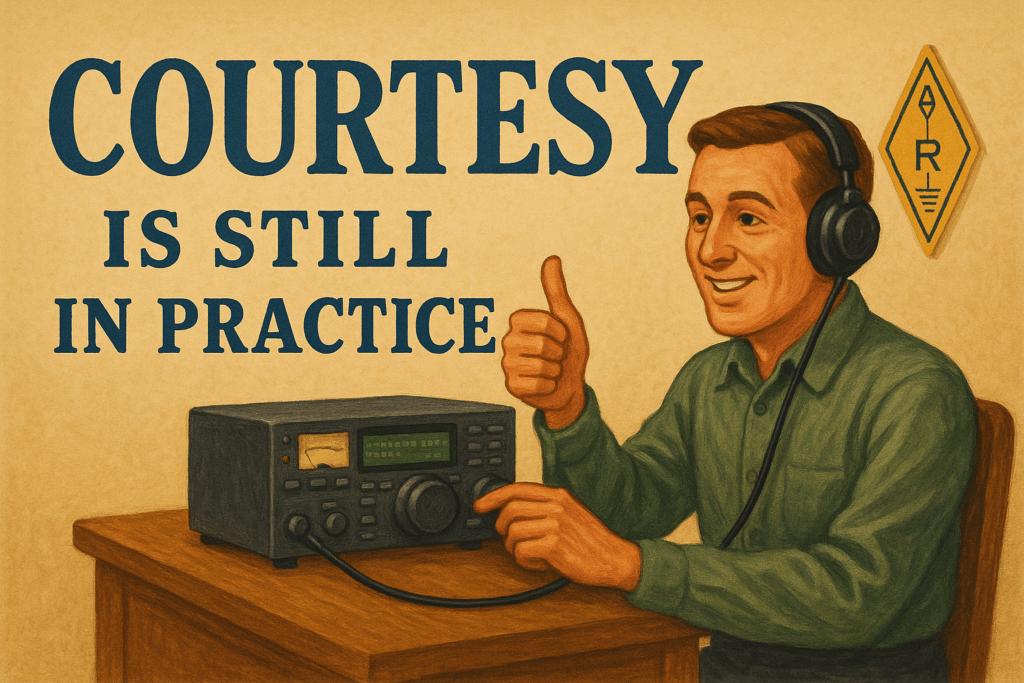
The posts I wrote on the amateur radio code of conduct and the broader ethics of the hobby may be some of the most meaningful pieces in this whole series. That’s partly because so much of my professional life has been about building cultures of safety and responsibility—cultures where people look after each other because the stakes demand it.
Amateur radio is no different.
A shared spectrum is, fundamentally, a shared responsibility.
Al Penney’s lectures repeatedly emphasized something that mirrors my experience with international standards work: the system only functions when people behave well, even when no one is watching. You don’t kerchunk the repeater. You don’t monopolize a calling frequency. You don’t ignore the interference you might be causing simply because it’s inconvenient to fix.
Courtesy isn’t just etiquette—it’s a form of engineering ethics applied to on-air behaviour. Given how rare civility can feel in today’s broader social landscape, it’s reassuring to see the amateur radio community still committed to courtesy, etiquette, and decorum as everyday practice.
Learning (and Relearning) with a Beginner’s Mind
I’ve forgotten how refreshing it is to sit on the “student” side again. To wrestle with Q-codes that seem like they should have internal logic (but do not), to memorize band plans that look like someone solved a regulatory Sudoku, to absorb historical quirks that persist simply because they work.
There’s a humility in being a beginner again—a humility I didn’t know I needed.
And truthfully? It’s been fun.
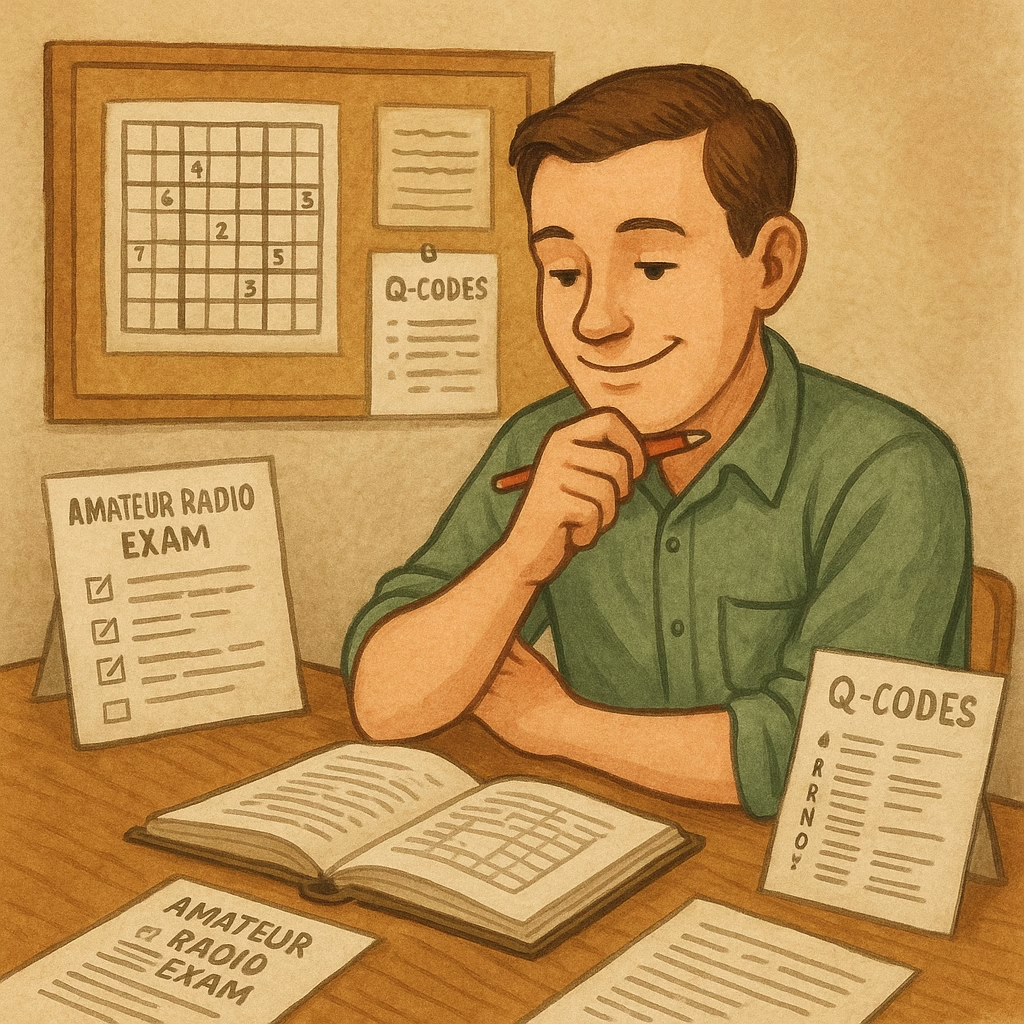
I’ve enjoyed every minute of preparing these posts. Writing them forced me to clarify what I thought I knew, dig deeper into what I didn’t, and examine why certain ideas matter—not just for the exam, but for the kind of operator I want to be.
Radio as a Mirror of My Professional World
What surprised me most was how often amateur radio echoed my career in safety:
- Grounding and bonding? Familiar territory.
- RF exposure limits? A cousin of machinery hazard analysis.
- Lightning protection? Indistinguishable from industrial surge management.
- EMC troubleshooting? That’s been Tuesday morning for 30 years.
- Regulations? I’ve lived inside ISO, IEEE, IEC, CSA, and SCC frameworks for most of my adult life.
In many ways, this journey reminded me that engineering disciplines are not isolated silos. They are different dialects of the same language.
What Comes Next
I’m nearing the Basic exam now, and with it, the formal beginning of a new part of this journey. But even before the call sign appears beside my name, I already feel like I’ve joined a centuries-old conversation—one built across continents, frequencies, and generations of experimenters, tinkerers, and communicators.
This series started as a record of what I was learning.
Somewhere along the way, it became something richer:
A chronicle of reconnecting—with old skills, old curiosities, and parts of myself I had left dormant.
Once the exam is done, I’ll write a final reflection. After that? Who knows.
Maybe I’ll build an antenna.
Maybe I’ll chase DX.
Maybe I’ll get lost in the waterfall.
Maybe I’ll discover something unexpected again.
That’s the magic of radio.
You never quite know what’s on the air until you listen.

This post marks the end of my week-by-week write-up of the RAC Basic Qualification Course, but not the end of the journey. As I move toward the exam and eventually onto the air, I’m carrying forward not just the technical lessons from each class, but the curiosity, discipline, and sense of community that make amateur radio such a compelling space. Thanks for following along — and stay tuned for what comes next.

Leave a Reply