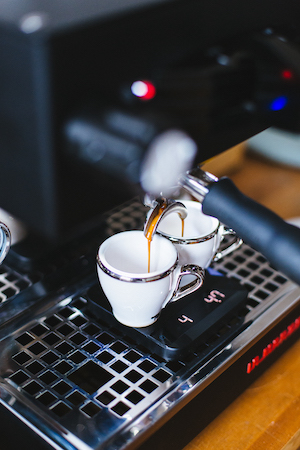
Given that this blog’s tagline is …because coffee…, you might think I would have written about this vital fluid long ago. I’ve had other things on my mind besides my favourite beverage. If you’re unclear about what I’ve been thinking about, see my earlier posts about my world travels, in person and via radio, or check out my Now page.
Early exposure


by Andreaze – Own work
CC BY-SA 4.0
I first started drinking coffee around age 6, in the early 1970s. At the time, my parents drank instant coffee most of the time, and percolated coffee on fancy occasions (a process that almost universally produces abominable brews by boiling and repeatedly recirculating the water).
1980s drip coffee

Agent Palmer’s blog
High school

Fast forward to high school, when I started drinking drip coffee in the high school cafeteria. Tim Hortons’ coffee became a thing for me (and most of my friends) during those years too. That brew was generally better than the instant coffee I got at home, or even the drip coffee made by the Mr. Coffee machine in nearly every home in the 1970s and 80s.

When I started college in 1982, cafeteria coffee and Tim Hortons’ coffee were staples. I also used a manual Melitta filter at home.
Work exposure
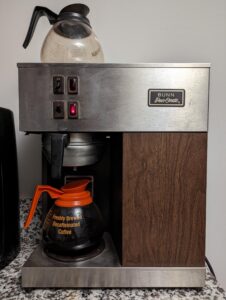
After college, I started my first full-time job and was introduced to the office Bunn coffee machine. For a drip machine, few coffee makers make coffee as uniformly poor. I think part of the problem is the quality of the coffee businesses buy for this purpose. A bigger part is keeping the heat on under the pot all the time. And the heat always seems to be set too high. Anyway, the net result is nasty coffee.
Caffeinated to the max
In the early 90s, my caffeine addiction hit new heights. I was drinking 10-12 mugs of drip coffee a day. My employer used Bunn equipment that brewed into large thermal carafes, so the coffee never got that burnt taste the Pour-O-Matic machines imparted. Coffee was free and readily available, and the pressure was high.
Self-employment brings choice
Eventually, I started working for myself. With my wife’s help, I weaned myself down to 2-3 8 oz mugs a day. During this time, we started drinking espresso-based drinks. Our first espresso machine was a cheap machine we picked up somewhere; I’m no longer certain of its make or where we got it. You could make coffee with it, but it wasn’t much. It gave us a chance to discover home espresso.


Eventually, we wore that machine out and replaced it with a Breville Infuser and a Smart Grinder. As an entry-level espresso machine, the Breville Infuser is a great place to start.
In time, the steam valve seized despite regular descaling, so we had it repaired. Eventually it seized again, and we replaced it with another Infuser. Eventually, we wore out the first Smart Grinder and replaced it with another. The steam valve on the new machine eventually seized, so we sent it to Breville’s service centre for repair. After it came back, it ran well for a while, but then the pressure gauge quit working. I think some mineral scale flaked off where the tubing was disturbed, travelled to the branch leading to the gauge, and blocked it. Eventually the steam valve seized again, and that was it for the Breville era.
We explored many different coffees during this time and struggled a bit with getting the grind size right. The Breville machines managed shot size by volume and had automatic single- and double-shot programmes. Hot water dispensing was limited to 8 oz, so you couldn’t overfill mugs. Steam production was limited only by the water volume in the tank. Because these machines are semi-automatic, they limit the number of variables; you can adjust only the coffee type, roast, and grind, which limits learning but makes the machines pretty easy to use.
The Quickmill era
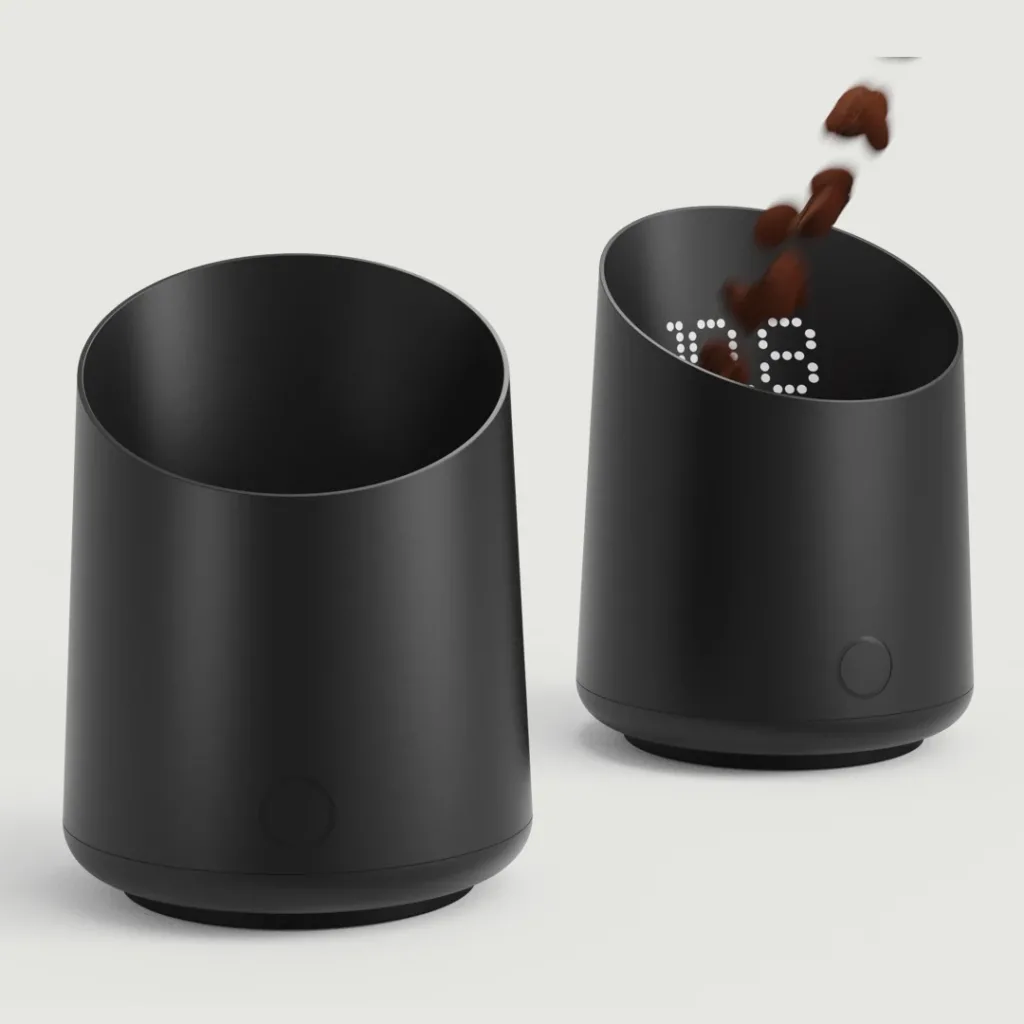
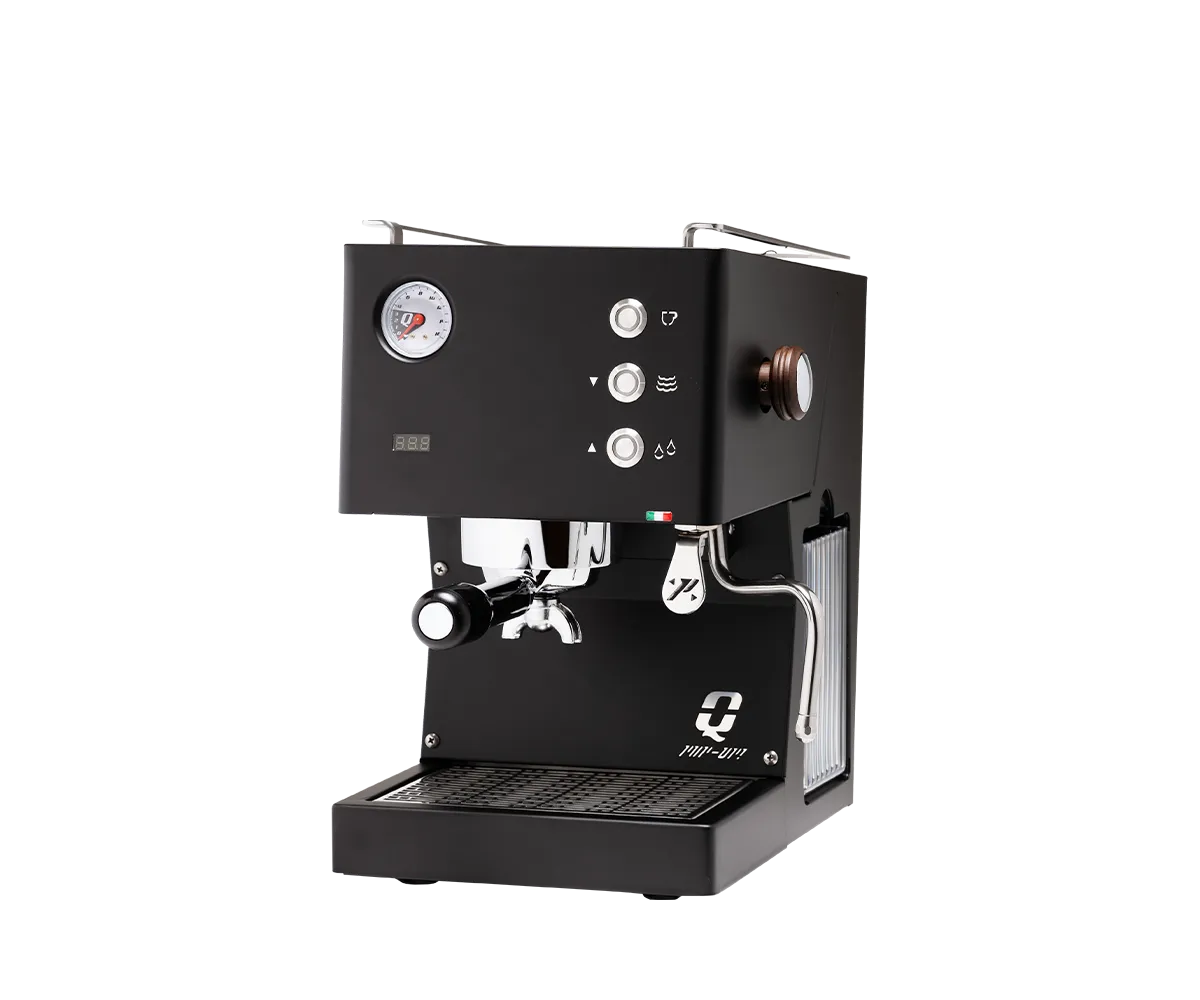
We’ve now upgraded again, this time to a Quickmill Pop Up. This fully manual espresso machine is made in Italy. It has a PID temperature controller, an infusion pressure gauge, and a pressure-profiling valve. IT uses a standard 58 mm commercial-sized portafilter, so obtaining a bottomless portafilter should be easy. The learning curve has been steep: first, adjusting the grind size until you could pull a good shot, then playing with the profiling valve to adjust extraction pressure and control the extraction rate. The other tool that has been especially helpful is a subminimal Subscale® Digital Dosing Cup. This device has a built-in scale that weighs in grams or ounces. You can weigh your dose of beans into the grinder, then weigh the shot size, allowing you to pull a shot that weighs about twice the dose. The electronics are IPX-4 protected, so cleanup is as easy as rinsing it out and wiping it with a dry cloth. The Subscale has really helped me refine my process.

Right now, we’re brewing Lavazza Crema e Aroma. It’s an Arabica–Robusta blend, known for its rich body, thick crema, and chocolatey notes. Lavazza’s 8/10 rating reflects the coffee’s intensity, not its quality, caffeine content, or roast level.
Intensity describes how strong and assertive a coffee tastes. It’s influenced by several characteristics:
- Roast level: Darker roasting generally produces more pronounced roasted flavours.
- Body: How rich, full, and substantial the coffee feels in your mouth.
- Flavour profile: The prominence of bitter, toasted, chocolatey, and other bold notes.
- Bean blend: Robusta generally contributes more body, bitterness, and crema than Arabica.
For Crema e Aroma, an intensity of 8/10 means you can expect a fairly bold, full-bodied coffee with a pronounced flavour that stands up well to milk.
Importantly, 8/10 doesn’t mean high caffeine content. A darker-roasted coffee isn’t necessarily higher in caffeine, although the Robusta component of Crema e Aroma can contribute more caffeine than a pure Arabica blend.
Lavazza’s specifications confirm that Crema e Aroma is a medium roast with chocolate aromatic notes and an Arabica–Robusta blend, despite its relatively high intensity rating.
I’ve found flavours in these beans I didn’t know existed. It’s been a real pleasure, and that’s saying something, considering I liked these beans before we got the Pop Up!

Another thing I’ve found is that filling the Smart Grinder’s 1 kg hopper with beans results in a poor cup. The beans go stale over the week it takes to use them, so I now measure them with the Subscale for every cup. I was given an Airscape® Kilo Coffee Canister.
One problem with storing coffee beans is that an airtight container isn’t necessarily air-free. Most conventional containers simply seal whatever air is inside along with the beans. That’s not ideal when you’re trying to keep freshly roasted coffee at its best.
Planetary Design’s Airscape coffee canisters take a different approach. You push down an inner lid until it reaches the top of the beans. As the lid moves down, a one-way valve lets air above the coffee escape. Once you push the lid into position, the valve closes, reducing the oxygen left in the container.
It’s a simple mechanical arrangement, with no pumps, batteries, or other complications.
Freshly roasted coffee beans continue to release carbon dioxide (CO₂) for some time after roasting. That’s why you’ll often find one-way degassing valves on specialty coffee bags.
The Airscape uses a similar principle. Its valve lets gas escape without removing the lid. This is especially useful when storing recently roasted beans.
Why Does This Matter?
Coffee contains a variety of aromatic compounds and oils that contribute to its flavour and aroma. Once the beans are roasted, exposure to oxygen gradually changes those compounds through oxidation. Over time, the coffee loses some of the characteristics that made it interesting in the first place.
Heat, light, and moisture can also contribute to deterioration, so how and where you store your coffee matters.
An opaque canister protects the beans from light, while Airscape’s sealing system limits exposure to oxygen and moisture. It doesn’t stop the ageing process entirely, of course, but it addresses several of the factors that cause coffee to go stale.
For me, the appeal is the design’s simplicity. Rather than just sealing the air in with the coffee, the Airscape removes much of it first. It’s an elegant solution to a fairly straightforward problem.
So that’s where we are now. Making a cup is more complicated now, but the coffee tastes much better!

Leave a Reply